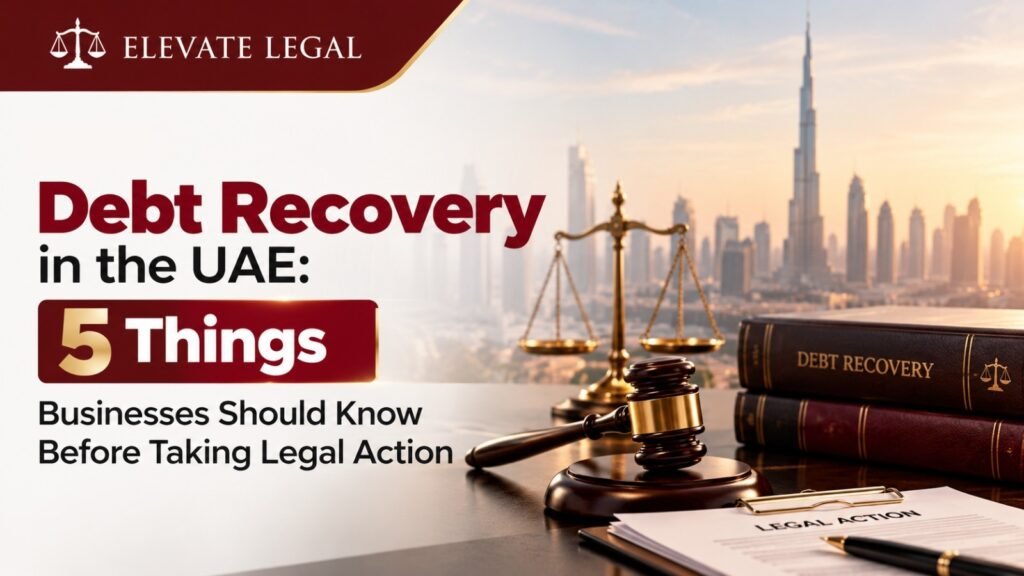
An invoice is overdue. The reminders have gone unanswered. Yet before you consider court proceedings, one question matters: can you show exactly why the money is due?
Debt Collection & Recovery Support in UAE starts with understanding the claim, not simply demanding payment. For businesses facing outstanding invoices, these five checks can help clarify the next move.
1.) Is the Payment Actually Due?
Start with the agreement, not the invoice date alone. Check the agreed payment period, any acceptance conditions, and whether the parties changed their terms later.
For example, a contract may link payment to delivery, approval, or completion of a milestone. If that condition remains disputed, the position may be less straightforward than an overdue balance suggests.
Ask yourself: What event triggered payment, and can we prove it happened?
2.) Can Your Documents Tell One Clear Story?
A convincing claim needs records that connect the order, delivery, amount, and payment obligation.
Build an evidence file:
- Signed agreements, purchase orders, and agreed terms
- Invoices, account statements, and payment records
- Delivery notes, completion certificates, or acceptance emails
- Correspondence concerning disputes, promises, and reminders
Next, carefully reconcile partial payments and credit notes. Otherwise, an inaccurate balance could weaken negotiations.
When seeking Debt recovery legal support UAE, give an adviser the full timeline, including messages that may not favour your position. Surprises are better addressed early.
3.) Is the Debt Disputed, or Simply Unpaid?
These situations need different approaches.
A customer may accept the amount but request more time. Another may challenge the work, quality, delivery, or agreed price. Neither response automatically settles the legal position.
Therefore, identify the disagreement. Has the debtor raised a complaint? Did your team answer it? Are there proposed deductions or counterclaims?
This distinction matters for Commercial debt collection UAE because a contractual dispute may require a different route from collecting an acknowledged debt.
4.) Have You Considered Proportionate Steps Before Court?
Legal proceedings are not always the first practical option. Depending on the facts, structured communication, a demand, negotiation, or mediation may be worth considering.
However, avoid assuming that sending a legal notice automatically forces payment. Its content, delivery, and legal effect depend on the claim and applicable requirements.
UAE Federal Decree-Law No. 40 of 2023 provides a framework for mediation and conciliation in civil and commercial disputes. Whether it suits a particular matter needs assessment.
Elevate Legal offers document-led guidance on possible pre-litigation steps and relevant considerations, without promising a settlement.
5.) Does the Proposed Legal Route Fit Your Claim?
Before escalating, review the amount, the debtor’s position, the contract, and the available evidence. Also consider jurisdiction, procedural requirements, expected costs, and whether enforcement could present practical difficulties.
UAE civil procedure law provides different routes for relevant claims, including payment orders where their legal conditions apply. Not every unpaid invoice qualifies.
For Legal debt recovery UAE, professional advice can help distinguish a possible procedure from one that actually suits your case.
Debt Collection & Recovery Support in UAE: What Happens Next?
The strongest starting point is often a well-organised file and an assessment, not a threatening message.
If you are comparing Debt collection consultants UAE, ask what they will review, what steps they can lawfully support, and whether court representation needs a licensed advocate.
Elevate Legal provides Debt Collection & Recovery Support in UAE through legal consultancy, recovery analysis, and guidance on available options. Contact our team to discuss your documents and the next step.
Official Sources
↳ UAE Legislation: Federal Decree-Law No. 42 of 2022, Civil Procedure Code.
↳ UAE Legislation: Federal Decree-Law No. 40 of 2023, Mediation and Conciliation.
Frequently Asked Questions
- Is an unpaid invoice enough to take legal action?
Not always. Contracts, payment conditions, supporting evidence, and applicable procedures also matter. Elevate Legal can review these factors.
- Can businesses settle unpaid invoices without court?
Sometimes. Negotiation or mediation may be appropriate. Elevate Legal can advise on possible pre-litigation options.
- Does a legal notice guarantee recovery?
No. It communicates a position or demand, but does not guarantee payment.
- What if the customer disputes the amount?
Review the contract, objections, and supporting records. Elevate Legal can provide guidance on assessing the dispute.
- Does Elevate Legal represent clients in UAE courts?
No. We provide legal consultancy and can coordinate referrals to licensed UAE advocates when representation is required.
*Disclaimer & Service Scope
This article is for general information only and does not constitute legal advice. Elevate Legal provides legal consultancy, document review, and advisory support for debt collection and recovery matters in the UAE. We do not provide court representation; where required, proceedings are handled by appropriately licensed UAE advocates. Legal options and outcomes depend on individual circumstances, applicable laws, and relevant procedures. No recovery outcome is guaranteed.